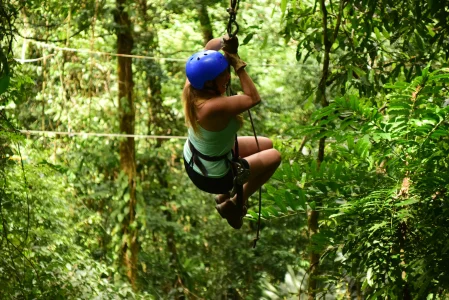
Why Choose Costa Rica for Ziplining?
Costa Rica stands out as one of the premier destinations for ziplining, and for good reason. Its zipline courses are among the best in the world, offering a mix of high-speed thrills and panoramic views that are hard to match.
What truly sets Costa Rica apart is its incredible biodiversity. Home to over 500,000 species, including vibrant toucans, playful monkeys, and elusive jaguars, Costa Rica’s ecosystems are a wonderland for wildlife enthusiasts. Ziplining here isn’t just about the rush—it’s an opportunity to immerse yourself in the heart of a thriving, natural paradise.
Moreover, Costa Rica’s commitment to sustainability and eco-tourism enhances its appeal. Many zipline operators prioritize conservation, ensuring their activities have minimal impact on the environment. By choosing Costa Rica, adventurers not only experience the thrill of a lifetime but also contribute to preserving the country’s remarkable natural heritage.
In short, ziplining in Costa Rica combines heart-pounding excitement with unparalleled scenic beauty, making it a must-try activity for anyone seeking adventure and a deeper connection with nature.
Here’s why Costa Rica should be at the top of
your ziplining bucket list.
A. Unique Rainforest Experience
One of the most captivating aspects of ziplining in Costa Rica is the opportunity to glide through some of the most biodiverse rainforests in the world. These tropical rainforests are teeming with life, offering a rare chance to see flora and fauna up close in their natural habitat.
From the moment you step onto a ziplining platform nestled high in the trees, you’re surrounded by the sights and sounds of the jungle. The dense canopy provides a unique vantage point to observe wildlife such as monkeys, sloths, and vibrantly colored toucans.
Beyond the wildlife, the rainforests themselves are a marvel!
B. World-Class Ziplining Facilities
The country boasts some of the best ziplining facilities in the world, designed to provide a amazing yet secure experience for participants of all skill levels.
Top-rated ziplining operators like Selvatura Adventure Park in Monteverde and Sky Adventures in Arenal prioritize safety without compromising on excitement. In addition to safety, the facilities offer a variety of zipline courses to cater to different preferences. Some courses include a mix of short and long lines, allowing you to build confidence before tackling the more challenging runs. Others feature heart-pounding lines that span over a kilometer, offering a high-speed ride with breathtaking views.
Many operators also go the extra mile to enhance your experience by incorporating other exciting elements. Platforms may be built around massive tree trunks, giving you the feeling of standing in the middle of the jungle canopy. Some tours include suspension bridges, rappelling, or even “Superman” lines, where you’re strapped in face down, simulating the sensation of flying.
C. Thrilling Views and Landscapes
Costa Rica’s ziplining experience is not just about the adrenaline—it’s about the views.
Imagine ziplining over the lush greenery of the Arenal Volcano region, with the majestic volcano towering in the background. In the Monteverde Cloud Forest, the landscape is equally mesmerizing. The high-altitude forest is often shrouded in mist, creating a mystical atmosphere.
If you venture to the coastal region of Manuel Antonio, you’ll experience a different kind of beauty. Here, ziplining combines jungle and ocean views. You’ll fly through tropical forests and, at certain points, catch glimpses of the sparkling Pacific Ocean.
Even in the dry forests of Guanacaste, ziplining offers breathtaking scenery. The landscape here is characterized by golden-hued trees and rugged terrain, providing a stark contrast to the lush rainforests of other regions. This diversity in landscapes means that no two ziplining experiences in Costa Rica are the same.
Top Ziplining Destinations in Costa Rica
A. Monteverde Cloud Forest
Monteverde Cloud Forest is a must-visit for anyone seeking a high-altitude adventure. Perched in the mountains, this area is known for its dense mist and rich biodiversity. Ziplining here allows you to glide above the treetops, offering a bird’s-eye view of the lush greenery below.
B. Arenal Volcano Region
The Arenal Volcano Region is synonymous with adventure, and ziplining here offers an unparalleled combination of adrenaline and breathtaking scenery. Located near the town of La Fortuna, this area features a majestic active volcano, lush rainforests, and numerous waterfalls.
Many of the zipline courses here are built to maximize the volcanic landscape, with platforms that provide panoramic vistas. Some operators also combine ziplining with other activities, such as hanging bridges tours and thermal hot spring visits, making it easy to pack a full day of adventure.
C. Manuel Antonio National Park
If you’re looking to combine your ziplining adventure with some beach time, Manuel Antonio National Park is the place to be. Located along Costa Rica’s Pacific Coast, this park is famous for its stunning beaches, vibrant wildlife, and lush rainforests.
Unlike other regions, Manuel Antonio’s ziplining experiences often include multiple adventure elements, such as rappelling, canopy bridges, and ATV rides. After your ziplining tour, you can easily head to the beach for a relaxing swim or a sunset stroll.
D. Guanacaste Province
Located in northwestern Costa Rica, Guanacaste Province is known for its dry tropical forests, rugged mountains, and sun-drenched beaches. While the region is often associated with luxury resorts and surfing, it also offers some of the most unique ziplining experiences in the country.
One of the highlights of ziplining in Guanacaste is the opportunity to explore the Rincón de la Vieja Volcano National Park. This park features a mix of ziplines, canyon swings, and even hot springs. For those staying in beach towns like Tamarindo or Playa Hermosa, ziplining tours in Guanacaste offer an easy and exciting inland escape.
What to Expect During a Ziplining Tour
A. Preparation and Safety Briefing
Before you take off, every ziplining tour starts with a comprehensive safety briefing. Guides will walk you through essential safety protocols, including:
- Proper ziplining posture (how to brake, hold the harness, and position your body).
- What to do if you stop short of the platform.
- Emergency procedures and hand signals to communicate with guides.
B. Gear and Equipment Overview
You’ll be equipped with specialized gear designed for safety and comfort:
- Harness: Securely fitted to keep you stable while suspended.
- Helmet: Protects your head from potential impact.
- Carabiners and Pulleys: Connect your harness to the zipline cable, allowing smooth and controlled gliding.
- Gloves (in some cases): Used for braking or gripping the cable as needed.
Guides will double-check all gear to ensure everything is properly secured before starting.
C. Duration and Number of Lines
Ziplining tours can vary widely in length, depending on the location and package:
- Short Tours: 1-2 hours, typically covering 5-7 lines.
- Extended Tours: 3-4 hours, featuring up to 12-15 lines, sometimes including bonus activities like rappelling or suspension bridges.
- Each line varies in length and speed, ranging from short, scenic glides to high-speed, adrenaline-pumping runs over long distances.
D. Physical Requirements and Accessibility
While ziplining is generally accessible, some physical capabilities are required:
- Weight Limits: Most tours have minimum and maximum weight limits for safety, typically ranging from 50 lbs to 275 lbs.
- Mobility: Participants should be able to climb stairs or hike short distances to reach platforms.
- Age Restrictions: Many tours are family-friendly, but some lines may have a minimum age requirement (often 6-8 years old).
For those with special needs or physical limitations, some operators offer adaptive equipment or customized experiences to ensure everyone can enjoy the adventure.
A. Best Time to Visit for Ziplining
Dry Season (December to April):
- Ideal for ziplining as the weather is mostly sunny and dry.
- Clear skies enhance the breathtaking views of Costa Rica’s rainforests and volcanoes.
- Popular season for tourists, so expect more crowds and potentially higher prices.
Rainy Season (May to November):
- Offers a different kind of adventure with lush greenery and fewer crowds.
- Afternoon showers are common but usually brief.
- Some tours may operate in light rain, adding a thrilling touch to the experience.
- Be prepared for potentially slippery conditions on trails.
B. What to Wear and Bring
Clothing:
- Opt for comfortable, lightweight, and moisture-wicking fabrics.
- Wear long pants or shorts that allow free movement.
- A lightweight rain jacket is useful during the rainy season.
Footwear:
- Closed-toe shoes are mandatory, preferably hiking shoes or sturdy sneakers.
Essentials to Bring:
- Sunscreen, even on cloudy days.
- Insect repellent to keep bugs at bay.
- A small backpack for water, snacks, and a camera or phone with a secure strap.
- Sunglasses with a strap for eye protection.